
Where we have been and why it still matters
In 1992, six women sat down for lunch in Spokane and started Women Helping Women Fund to change how philanthropy worked for women and children in Spokane County. On May 21, 1,400 people filled the Convention Center at our Give Like a Woman event to continue what those six started.
One of our co-founders, Marcy Drummond, shared a reflection about how women's philanthropy has evolved over three decades, and the impact of collective giving.
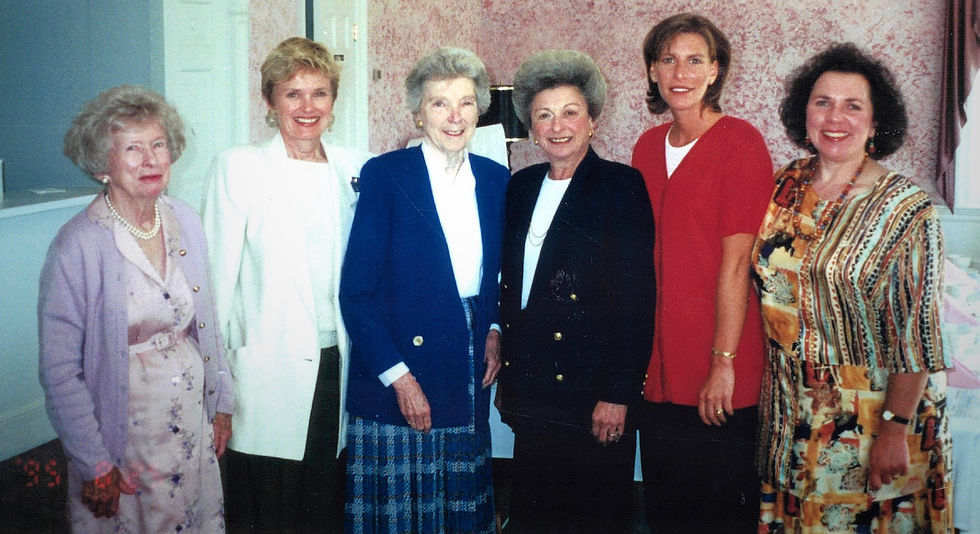
WHWF Co-Founders Vivian Winston, Mari Clack, Janet Skaden, Vicki McNeill, Marcy Drummond, and Shirley Rector
"A friend texted me today after the Women Helping Women Fund event. She wanted to talk about her donation this year. I started typing back, and what was supposed to be a quick reply turned into a small history lesson, because I realized she might not know how different things looked when six of us sat down for lunch in 1992 and decided to start something.
Back then, generally speaking, women’s philanthropy was still pretty nascent. Women mostly volunteered. Men, or the companies they led, usually made the significant donations. That dynamic quietly shaped which organizations got funded and which ones, including a lot of programs serving women and children, were left scraping by.
So we started Women Helping Women Fund in Spokane. Six women, one lunch, a belief that the people closest to a problem usually understand it best, and that pooled giving could move real money toward causes that big institutional donors were overlooking.
Three decades later, the landscape looks different in ways I could not have predicted.
Giving to women’s and girls’ organizations surpassed $11 billion in 2022 and represented just over 2 percent of all U.S. charitable giving, according to the Women’s Philanthropy Institute. That is progress. It is also a reminder of how much room is still on the table, because 2 percent is not a ceiling anyone should be comfortable with.
Meanwhile, collective giving has become one of the fastest-growing movements in American philanthropy. Between 2017 and 2023, roughly 4,000 giving circles mobilized 370,000 people to give more than $3.1 billion. Sixty percent of those circles are entirely women (Philanthropy Together, 2024). The model we were figuring out in 1992 turned into a movement.
Here is what struck me yesterday, looking out at 1,400 people in that room.
Most of them are not writing six-figure checks. Many of them are giving what they can, sometimes stretching to give a little more than feels comfortable. And together, that adds up to grants that have moved more than $7 million into this community, funding nearly 600 programs over 34 years. The math of collective giving has never required everyone to be wealthy. It has only required enough of us to show up.
That is the part I wanted my friend to hear. Women's philanthropy has evolved enormously, and there is still a place in it for every woman, at every giving level. Maybe especially now, when so much of the conversation about philanthropy is dominated by billionaires and mega-donors. Collective giving is the quieter, more democratic story underneath all of that, and women have been writing it for a long time.
If you have ever wondered whether your contribution mattered, look at what 1,400 people built yesterday.
That is the answer."


Comments